On a small marketing team, you can know who you want to reach and what you want them to understand, yet still spend hours preparing a campaign. You have to build the audience, check the data, and configure the automation. That work matters, but it can take attention away from deciding whether the campaign should go out in the first place.
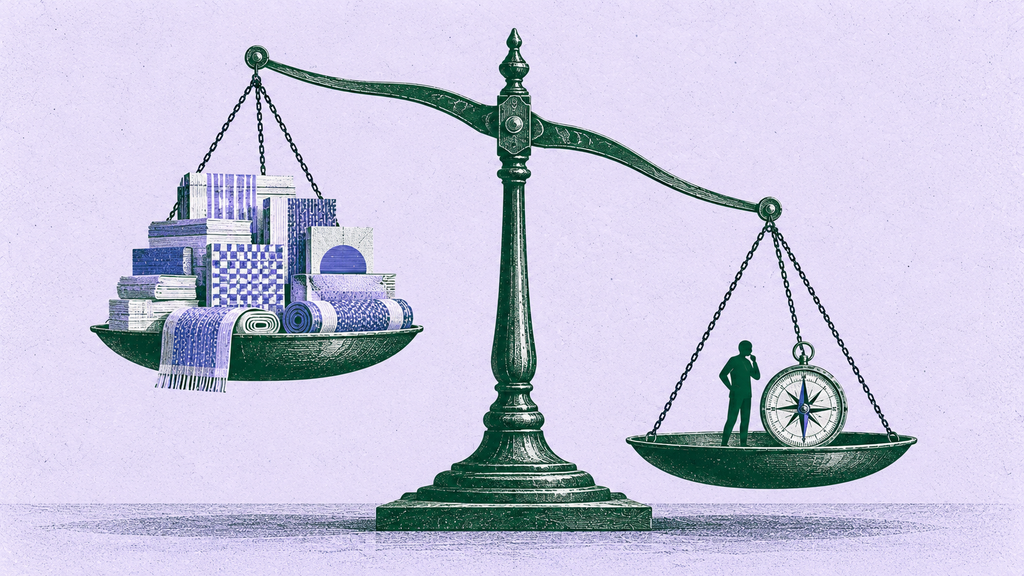
The future of marketing with AI gives us a chance to spend less time on mechanics and more time on judgment. As execution gets easier, we have to decide what the customer needs, what is worth making, and what we should learn from the result.
The data exists. The understanding doesn’t.
If I want customers who have Product A, don’t have Product B, have engaged recently, and haven’t heard from us in a certain period of time, I should be able to say that. Instead, I may first have to work out where those details live, which records connect, and what kind of list or rule the platform requires. I know the audience I want to reach. Getting the software to represent it is a separate job.
Suppose the founder asks which prospects from the last campaign became qualified opportunities. The email report alone cannot answer that. You have to check the form submissions and CRM records, making sure you are following the same people rather than counting every opportunity as a campaign result.
Impressions, clicks, and leads tell us something about the activity. They don’t tell the whole story. Did we reach the intended customers? Did any of those conversations progress? Would we run this campaign the same way again? You may not be able to answer every question perfectly, especially on a small team. But the information should help you decide what comes next.
In its 2025 Marketing Data Report, Supermetrics reported that 56% of the marketers it surveyed didn’t have enough time to analyze their data thoroughly. The survey wasn’t limited to startup marketing teams, and it doesn’t explain why each respondent lacked time. Still, it captures a familiar problem: collecting information is easier than finding the time to understand it.
AI could take more of the technical work out of both tasks. A marketer should be able to describe an audience or ask what happened with a campaign without reconstructing how every system stores the information. Before anything is sent, they should still be able to check the source data, see who qualifies and why, and review what the system plans to do. If some of that data cannot be verified, the system should show the gap before the marketer approves the send.
Just because customers match the Product A and Product B criteria doesn’t mean they should receive a message about Product B today. What do we know about their interests, their relationship with the company, and the timing of the offer? A customer who has just started using Product A may need help with that product first. Someone who has asked about Product B may be ready for a different conversation. The list can contain both people, but the same message may not serve both of them. Making the audience easier to build gives us more room to consider those questions. A campaign can be executed correctly and still be the wrong campaign to send.
What happens when execution gets easier?
Making an email, website, or campaign is partly execution. Deciding what it should communicate, and whether it communicates that well, is another part of the work. That’s where taste becomes useful, and where the judgment behind the work matters most.
Taste can feel instinctive. You look at something and recognize that one version is better than another. A website feels cheap, or several sections don’t seem to belong to the same company. You may not immediately know every reason why, but you can investigate that reaction.
Maybe the design is inconsistent. Maybe the page is polished but doesn’t explain the product clearly enough for the intended customer. Looking at work you admire and comparing it with work that falls short can help you understand why. Over time, you develop a better sense of what the audience is likely to notice, what develops trust, and what gets in the way of the message.
AI can help you try different layouts and clean up inconsistent design. But if a page already explains the product clearly, another week of visual polish may not change what a prospective customer understands.
Creative direction brings a related challenge. Two people with the same information can imagine completely different campaigns because they bring different experiences to it. AI can produce more versions of those ideas, but an impressive campaign can still be built around a problem the customer doesn’t have.
Do not mistake the menu for the food
You can have customer reviews, research, interviews, historical data, and behavioral data. All of it helps you understand an audience. But the description of an experience is still not the experience itself.
I’ve run into this while building Aldwin. You can talk to AI endlessly about a startup idea. You can have it simulate customers, challenge the idea, analyze competitors, and research every angle. You can come away with a convincing explanation of why something ought to work. At some point, you have to talk to a real person.
Otherwise, you can build an echo chamber of increasingly sophisticated ideas that have never met the market. A customer may understand your pitch differently than you expected or care far more about a problem you mentioned in passing. That conversation can change how you explain the product and what you decide to make next.
For marketers, this matters before a campaign goes out and after it comes back. Research can give you a useful starting point. Listening to customers and prospects helps you test whether the message is landing and understand what the response means. Sometimes what you learn should change the next creative brief before another asset is made.
Someone has to set the direction
Aldwin’s launch video has been a good example for me. I can give AI an enormous amount of context: the product, its positioning, the roadmap, and what I want someone watching the video to understand. The output can still look decent while going in the wrong direction.
We ran into that when the video became too focused on the interface and started feeling like a product demo. I wanted to tell Aldwin’s story. Looking at the result, I worried someone might remember the UI but not understand what the product was meant to do. That gave me a more useful way to review the next version: would a viewer understand the story, or see a sequence of software screens?
Even with smoother transitions and cleaner interface shots, it would still have been a product tour. We’d have ended up with a more polished version of the wrong thing.
I can check whether the video plays correctly. That won’t tell me if people understand Aldwin’s story. I need to put it in front of the intended audience and find out what they take away.
The same uncertainty comes up with campaign results. If an email gets a low click rate, I wouldn’t assume the design needs changing. I’d want to know who received it, what we asked them to do, and whether the offer made sense to those people. Redesigning the email won’t solve a problem with the audience or offer.
You can make a good decision and still get a bad outcome. You can make a bad decision and get lucky. The results matter, but interpreting them takes work too.
Judgment means understanding the business
On a small team, there is always more to do than time to do it. AI makes it easier to produce another asset or launch another campaign, but the list of possible work doesn’t tell you which item matters most.
Imagine the website is okay, the pipeline is light, and reporting is messy. If qualified prospects are visiting the site but leaving confused about the product, I’d work on the website. If the right prospects aren’t finding the company in the first place, more visual polish may not help. And if the reporting is too unreliable to tell which problem we have, I’d start by getting enough visibility to make that decision.
What the future of marketing with AI means for marketers
On a small team, the time spent checking lists, configuring sends, and piecing together reports adds up. That’s part of why knowing when marketing automation is worth introducing matters. When repeatable tasks take less time, marketers have more room to ask who the next campaign is for and what should change for those people. After launch, they can review the response before moving on to the next deliverable.
That’s part of the idea behind Aldwin. We want to make more of the underlying work manageable so marketers can spend more time understanding people, improving what they do, and deciding what deserves their attention.
As execution gets faster, knowing where you’re going matters more.